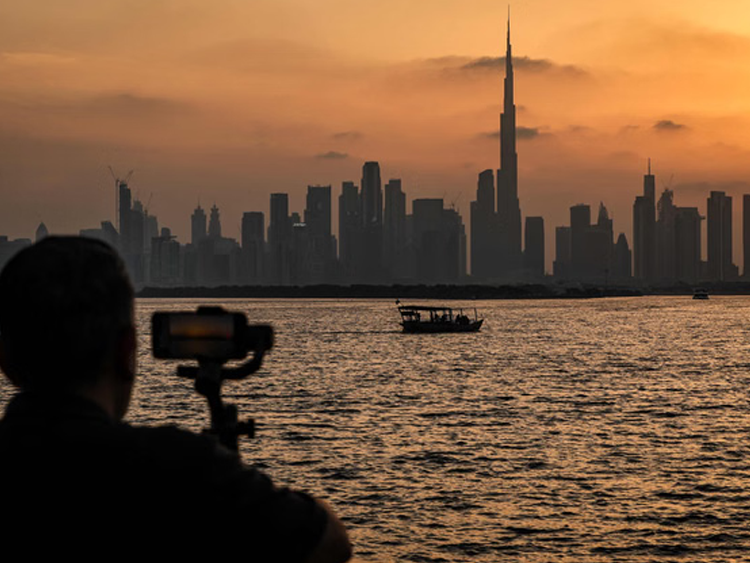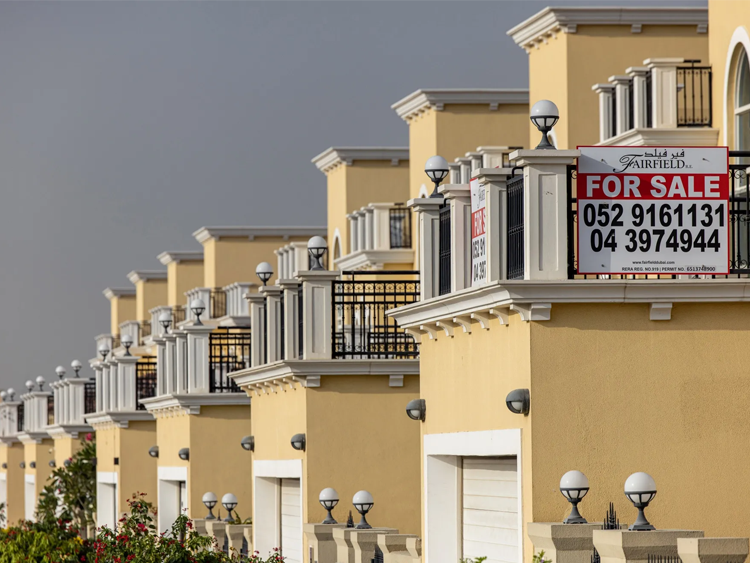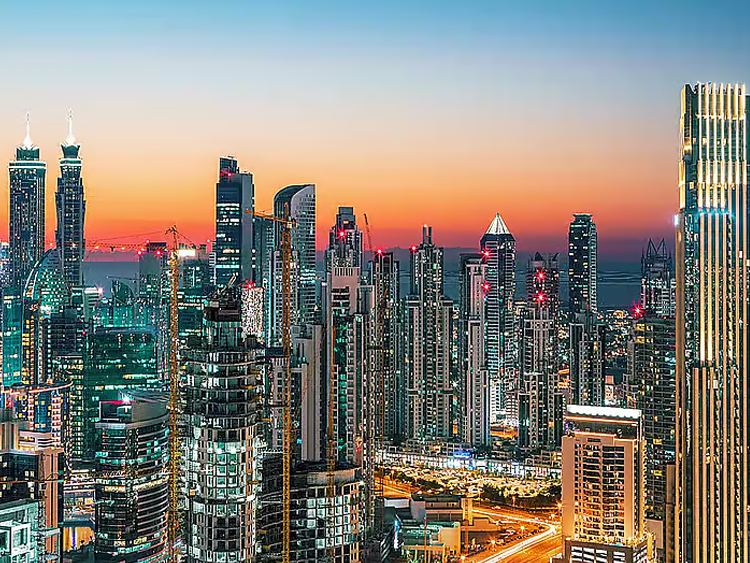
In the world of global real estate, headlines can often create a temporary fog of uncertainty. This was the case during the first weekend of March 2026, as geopolitical tensions between the United States and Iran sparked a wave of cautious sentiment across the GCC.

However, as the dust settles, the data tells a much more powerful story than the headlines. The UAE real estate sector hasn’t just weathered the storm it has sprinted right through it.

Here is an in-depth look at why Dubai’s property market remains one of the most resilient investment hubs in the world.


The “Weekend Pause” vs. The Monday Surge

While the weekend of March 1st saw a temporary slowdown driven by investor sentiment, the rebound was almost instantaneous. By Monday, March 2nd, the Dubai Land Department (DLD) recorded a staggering 874 real estate transactions with a total value of AED 2.46 billion ($670 million).

This quick return to high-volume trading proves that the market’s liquidity is not tied to short-term news cycles, but rather to a deep-seated confidence in the UAE’s long-term stability.

Perception vs. Reality: Life on the Ground

There is often a significant gap between international media perception and the reality of daily life in the Emirates. While regional alerts were heightened, the UAE government responded with swift, clinical precision.

Enhanced security measures were implemented across land, sea, and air to ensure that supply chains and public services remained uninterrupted. The result?

  • Airports remained fully operational.

  • Retail hubs like Dubai Mall and Downtown Dubai remained packed with tourists and residents.

  • Hospitality sectors reported high occupancy levels for holiday homes and hotels.

Essentially, the “engines” of the city never stopped turning.

Operations as Usual: Handovers and Renewals

One of the truest tests of a real estate market is its operational consistency. According to a recent report by Provident Estate, the “back-office” of the industry remained in full swing throughout the period of tension.

Property handovers, snagging services, and contract renewals continued without delay. Secondary market viewings—often the first thing to drop during a crisis—remained consistent across Dubai’s key communities. This suggests that both buyers and tenants are looking past the noise and focusing on the tangible value of UAE property.

The Structural Pillars of Resilience

Why does Dubai stay so stable when other markets might falter? The article highlights several foundational pillars that act as a safety net for the economy:

  • Institutional Crisis Management: The UAE has mastered the art of coordinating between government bodies to maintain public confidence.

  • Banking Liquidity: A robust financial sector ensures that capital continues to flow, even during global volatility.

  • Diversification: Real estate is a cornerstone of a much larger strategy that includes aviation, tourism, and financial services, making the economy less vulnerable to single-point failures.

The Expert Take: “Built on Fundamentals”

Loai Al Fakir, CEO of Provident Estate, summed up the situation perfectly: “Dubai’s real estate market has proven time and again that it is built on strong fundamentals rather than short-term sentiment. What we are seeing now is a brief moment of caution, not a shift in investor confidence.”

Final Thoughts

The events of early March 2026 serve as a case study in market maturity. While geopolitical shifts are inevitable, the UAE has built a system designed to absorb these shocks and maintain its trajectory. For investors, the message is clear: the market is functioning, the liquidity is there, and the long-term outlook remains overwhelmingly positive.

Is now the time to buy? If $670 million in single-day transactions is any indication, the world’s investors have already made up their minds.

DUBAI, UAE – In a move that cements Uptown Dubai’s reputation as a rising epicenter for business and lifestyle, DMCC has officially launched The Plaza, a massive 21,000-square-meter open-air destination.

Positioned as the “connective tissue” of the Uptown Dubai district, the sprawling venue is designed to be a high-octane stage for everything from global corporate summits to star-studded concerts and community festivals.

A Venue Built for Scale

The Plaza isn’t just an open space; it is a tech-forward amphitheater of sorts. With a capacity to host up to 4,000 guests, the venue comes equipped with:

  • A 43-meter HD screen for immersive visual experiences.

  • Advanced staging and lighting infrastructure designed for quick event turnarounds.

  • Expansive green lawns and terraces that offer views of the Jumeirah Lakes Towers (JLT) skyline.

Strategically located at the heart of the district, The Plaza serves as a physical bridge, linking the landmark Uptown Tower with the surrounding residential and commercial phases currently under development.

Activating the “Work-Live-Play” Vision

Ahmed Bin Sulayem, Executive Chairman and CEO of DMCC, described the opening as a “defining milestone.”

“The Plaza introduces a scale and capability that positions Uptown Dubai as a premier venue for major international events, as well as everyday community moments,” said Bin Sulayem. He noted that the space is central to Dubai’s broader vision of being the world’s best city to live and work in, creating a “strong sense of place” for both residents and global professionals.

To ensure a year-round calendar of activity, DMCC has partnered with 7 Management—the powerhouse behind some of Dubai’s most popular hospitality concepts—to operate and program the space.

What’s Next for Uptown Dubai?

The debut of The Plaza coincides with a period of rapid growth for the district. Currently, two new commercial towers (standing 23 and 17 storeys tall) are under construction, which will eventually add 62,000 square meters of Grade A office and retail space to the area.

Once the master plan is fully realized, Uptown Dubai will boast over 538,000 square meters of total gross floor area, reinforcing its status as a massive integrated business hub for trade, finance, and technology.

First Look: The Moonlight Market

The Plaza is wasting no time in making its mark. Its first major activation is the Moonlight Market, a month-long Ramadan experience running from 6:00 PM to 2:00 AM. Visitors can expect street food favorites, open-air cinema nights, and curated retail stalls, offering a first glimpse at how the space will transform from a corporate hub by day into a vibrant social destination by night.

DUBAI — In a move that blends ancient desert wisdom with cutting-edge Chinese engineering, Dubai has officially committed to transforming its urban landscape into a “Sponge City.”

During the 2026 World Governments Summit (WGS), Dubai Municipality signed a strategic Memorandum of Understanding (MoU) with the Urban Planning and Design Institute of Shenzhen (UPDIS). The partnership aims to adapt China’s revolutionary water-management model to the unique climate of the UAE, ensuring the city remains resilient against the increasingly intense rainfall patterns affecting the region.

What is a ‘Sponge City’?

The concept, pioneered by Shenzhen to manage its own rapid urbanization, moves away from traditional “grey infrastructure”—the network of concrete pipes and pumps that often become overwhelmed during storms. Instead, a Sponge City utilizes “nature-based solutions”:

  • Permeable Pavement: Sidewalks and roads that allow water to soak through rather than pooling on top.

  • Bio-Swells and Rain Gardens: Landscaped green zones designed to absorb and naturally filter runoff.

  • Rooftop Greenery: Gardens that capture rainwater before it ever hits the street.

  • Underground Reservoirs: Massive “aquifers” that store excess water for later use in irrigation, reducing the city’s reliance on desalinated water.

A Partnership Born in Shenzhen

The agreement is the culmination of a year-long exchange that began in February 2025, when a high-level Dubai delegation visited Shenzhen. Officials found a striking parallel between the two cities: both are young, global tech hubs that have undergone explosive growth in just a few decades.

“This partnership reflects Dubai’s commitment to learning from the best in the world,” said Marwan Ahmed bin Ghalita, Director General of Dubai Municipality. “By collaborating with Shenzhen, we are not just solving a drainage issue; we are building a more liveable, green, and people-centric city.”

Beyond Water: A “Smart City” Blueprint

While the “Sponge City” model is the headline, the MoU covers a broader spectrum of urban innovation aligned with the Dubai 2040 Urban Master Plan:

  • AI-Driven Management: Using big data and 5G-enabled sensors to monitor water levels and predict drainage loads in real-time.

  • Transit-Oriented Development: Designing compact, “walkable” urban hubs that reduce carbon footprints.

  • Integrated Underground Services: Planning for the “city beneath the city” to streamline utilities and infrastructure.

The Resident Impact

For the people of Dubai, the benefits go beyond dry shoes. The Sponge City model requires a massive increase in urban greenery. By replacing concrete with parks and “rain gardens,” the initiative will naturally cool the city (combating the “urban heat island” effect) and provide more recreational spaces for families.

As climate change shifts traditional weather patterns, Dubai’s “sponge” transformation marks a proactive shift in governance turning the challenge of a desert storm into an opportunity for a greener, more sustainable future.

In February 2026, the UAE’s Emirates Drug Establishment (EDE) introduced a revolutionary “Organ on Chip” initiative during the World Health Expo in Dubai. This technology is set to transform the way drugs are developed and tested, moving away from traditional animal models toward more accurate, human-relevant systems.

Here is a summary of the development as reported by various outlets, including Gulf News.

What is “Organ on Chip” Technology?

Organ-on-chip devices are micro-engineered electronic chips that simulate the functions, structure, and biological responses of actual human organs.

  • The Mechanism: These chips (often the size of a microscope slide) contain tiny channels where fluids and human cells circulate. This creates a micro-environment that mimics the physiological and mechanical conditions of a real human body.

  • The Goal: To test the efficacy and toxicity of new drugs on highly accurate human models before they ever reach clinical trials.

Key Highlights of the UAE Project

  • Project Falcon: The initiative is part of a larger strategy called Project Falcon (Future of AI, Lab-Automation and Organ Chips for Onward Innovation in Medicine). It combines laboratory automation with AI to speed up drug discovery.

  • Replacing Animal Testing: Historically, drug testing has relied on animal models or flat cell cultures in petri dishes. However, animal physiology often differs from humans, leading to high failure rates in human trials. The “Organ on Chip” technology aims to solve this “biological reductionism” by using real human samples.

  • National Pharmaceutical Security: Dr. Shaikha Al Mazrouei, Director of the Reference National Laboratory at EDE, noted that adopting these advanced solutions strengthens the reliability of results and bolsters the UAE’s national pharmaceutical security.

Wide-Ranging Applications

The UAE plans to use this technology across several critical sectors:

  1. Drug Discovery: Developing disease models, screening compounds, and evaluating drug safety.

  2. Precision Medicine: Optimizing cell and gene therapies and identifying novel tumor antigens.

  3. Oncology: Rapid AI-based testing for clinical tumor drug sensitivity.

  4. Cosmetics: The technology will also benefit the cosmetics industry by providing a way to test skin sensitivity and toxicity without animal testing.

Why It Matters

By integrating AI-driven lab robotics and real-world data, the UAE is positioning itself as a global leader in medical product regulation and healthcare innovation. This technology doesn’t just make drug testing faster and cheaper—it makes it safer for patients by providing data that is directly applicable to human biology.


This report is based on announcements made at the World Health Expo (WHX) 2026 at Expo City Dubai.

ABU DHABI — UAE President His Highness Sheikh Mohamed bin Zayed Al Nahyan met with Kosovo President Vjosa Osmani-Sadriu at Qasr Al Shati on Thursday, signaling a deepening of ties between the Gulf nation and the Balkan republic.

The meeting, held on the sidelines of the World Governments Summit (WGS) 2026, focused on expanding economic partnerships, government modernization, and regional stability.

Key Highlights of the Meeting:

  • Economic Expansion: Both leaders reaffirmed their commitment to boosting trade and investment. Discussions centered on identifying new opportunities in development sectors that align with the mutual interests of both nations.

  • Government Modernization: With President Osmani in town for the WGS, the two presidents explored collaborative efforts in “future-proofing” government frameworks and digital transformation.

  • Balkan Stability: Sheikh Mohamed bin Zayed reiterated the UAE’s long-standing policy of supporting peace and security in the Balkans. He emphasized that stability in the region is a cornerstone for broader global security.

  • Humanitarian Recognition: President Osmani expressed gratitude for the UAE’s ongoing humanitarian initiatives in Kosovo, noting that Emirati support has been instrumental in the country’s social advancement and empowerment programs.

Strategic Context

The meeting comes at a symbolic time, as Sheikh Mohamed offered early congratulations to President Osmani ahead of Kosovo’s Independence Day on February 17.

For the UAE, the engagement underscores its growing role as a diplomatic mediator and economic partner in Southeastern Europe. For Kosovo, the partnership offers a vital bridge to Gulf capital and expertise in infrastructure and technology.

The discussions were attended by several high-ranking officials, including H.H. Sheikh Hamdan bin Mohamed bin Zayed Al Nahyan, Deputy Chairman of the Presidential Court for Special Affairs.


Quick Facts: UAE-Kosovo Ties

  • Occasion: Working visit for the World Governments Summit 2026.

  • Priority Areas: Trade, investment, and government innovation.

  • Diplomatic Stance: UAE continues to advocate for “dialogue and development” as the primary tools for Balkan integration.

Article Source

In a move that solidifies Dubai’s status as the undisputed financial capital of the region, His Highness Sheikh Mohammed bin Rashid Al Maktoum has officially launched the DIFC Zabeel District. This landmark AED 100 billion ($27.2 billion) expansion is not just a construction project—it is a bold blueprint for the future of global finance, technology, and urban living.

A New Era for Global Finance

The expansion is set to double the capacity of the Dubai International Financial Centre (DIFC), adding a staggering 17.7 million square feet of gross floor area. By the time the masterplan is complete, the district will be home to:

  • 42,000+ companies (up from approximately 7,700 today).

  • 125,000+ professionals, creating a massive talent pool for the global economy.

  • Six phases of development, with the first phase expected to welcome the public by 2030 and full completion targeted for 2040.

“In Dubai, we do not wait for change, we make it. We transform dreams into a reality that speaks the language of leadership.”H.H. Sheikh Mohammed bin Rashid Al Maktoum

The World’s AI & Innovation Powerhouse

At the heart of the Zabeel District lies a massive commitment to the “New Economy.” Over one million square feet will be dedicated exclusively to future technologies.

  • The World’s First Purpose-Built AI Campus: A specialized hub designed to house 6,000 companies and 30,000 AI specialists.

  • Innovation Engine: The district will feature a Gaming and Immersive Technologies Hub, positioning Dubai as a global leader in digital content and simulation.

Beyond Business: A 24/7 Lifestyle Destination

The Zabeel District isn’t just for work; it’s designed to be a seamless continuation of Dubai’s urban fabric. Connected to the existing Gate District by a “signature bridge,” the new area will feature:

  • World-Class Education: The DIFC Academy will grow tenfold, accommodating 50,000 learners annually and attracting top-25 ranked global universities.

  • Art & Culture: A first-of-its-kind art pavilion and dedicated cultural spaces will cement DIFC’s reputation as the city’s creative heart.

  • Green Living: The design emphasizes “integrated living,” with lush green spaces, biodiversity, and futuristic transport systems that prioritize wellness and connectivity.

Why This Matters

Aligned with the Dubai Economic Agenda (D33), this expansion aims to propel Dubai into the top four financial centers globally. For investors, entrepreneurs, and residents, the Zabeel District represents a “forever investment”—a place where the bridge between East and West is strengthened by innovation and a high quality of life.

The message from the launch ceremony was clear: Tomorrow begins here.


Key Statistics at a Glance:

  • Total Value: AED 100 Billion

  • Total Area: 17.7 Million Sq. Ft.

  • Projected Companies: 42,000

  • Projected Workforce: 125,000

  • Timeline: First phase opens 2030; Completion 2040

0 replies

Leave a Reply

Want to join the discussion?
Feel free to contribute!

Leave a Reply

Your email address will not be published. Required fields are marked *

In the fast-paced, skyscraper-filled landscape of Dubai, there is a word that carries the warmth of home and the weight of tradition: Hewi.

Traditionally, the hewi was the heart of the Emirati home—an outdoor courtyard where families gathered, neighbors shared stories, and children played under the watchful eyes of their elders. This week, Dubai took a major step in bringing that soul back to the modern city.

Witnessed by H.H. Sheikh Hamdan bin Mohammed bin Rashid Al Maktoum, a new partnership was signed between Dubai Municipality, Binghatti, and the General Construction Company to develop two brand-new community spaces: Hewi Al Barsha and Hewi Muhaisnah.

What is the Hewi Dubai Initiative?

Launched as part of Dubai’s vision for a “20-minute city,” the Hewi initiative isn’t just about building parks; it’s about reviving the spirit of the Fareej (the traditional neighborhood). The goal is to create inclusive, walkable spaces where residents feel a true sense of belonging.

The project follows the massive success of the pilot site, Hewi Nad Al Sheba 4, which showed that even in a digital age, people still crave physical spaces to connect with their community and nature.

The Design: Where Tradition Meets Tomorrow

The new projects in Al Barsha and Muhaisnah are designed with specific “zones” that honor Emirati heritage while serving modern needs:

  • Al Decha: A quiet, shaded area located near the mosque—perfect for elders to gather over Arabic coffee and share wisdom with the younger generation.

  • Al Saaha: A flexible “community square” for events, workshops, and celebrations. It’s a space owned by the residents, for the residents.

  • Al Yalsa: A comfortable seating area strategically placed to overlook the children’s play zones, allowing parents to relax while keeping a close eye on their little ones.

  • Sustainability at the Core: Forget concrete jungles. These spaces use native plants like Sidr and Tamarisk trees and sustainable materials like limestone and rammed earth to stay cool and eco-friendly.

Why It Matters

As Marwan bin Ghalita, Director General of Dubai Municipality, noted, these spaces represent a “qualitative shift” in urban planning. By moving away from “one-size-fits-all” parks, Dubai is creating bespoke community hubs that reflect the unique identity of each neighborhood.

For residents of Al Barsha and Muhaisnah, this means more than just a new place to walk. It means a place where your children can build memories, where your parents can find quiet comfort, and where you can finally get to know the person living next door.

Looking Ahead

The expansion into Al Barsha and Muhaisnah is just the beginning. Dubai Municipality has expressed interest in partnering with more private developers to bring the “Hewi” concept to every corner of the emirate.

In a city known for building the “tallest” and “largest,” the Hewi initiative reminds us that sometimes the most important things are the small, shared moments in our own backyards.


Are you a resident of Al Barsha or Muhaisnah? What would you like to see in your new community space? Let us know in the comments!

Article Source

0 replies

Leave a Reply

Want to join the discussion?
Feel free to contribute!

Leave a Reply

Your email address will not be published. Required fields are marked *

Dubai’s real estate market is evolving rapidly, and while established areas like Downtown Dubai and Palm Jumeirah remain popular, 2025 is seeing a surge in emerging neighborhoods. Savvy investors are turning their attention to these areas, which offer affordable prices, high growth potential, and modern amenities.

This guide highlights the top emerging neighborhoods in Dubai and why they are worth considering for your next property investment.

  1. Dubai South

Dubai South is a master-planned city surrounding Al Maktoum International Airport. Designed to support Expo 2020 legacy growth, it offers:

  • Affordable villas and apartments compared to central Dubai
  • Proximity to Dubai Expo 2020 sites and future commercial hubs
  • High potential for capital appreciation as infrastructure develops

Investors can expect long-term growth as more businesses and residents move into the area.

  1. Dubai Silicon Oasis (DSO)

A technology-focused community, DSO combines residential and business spaces:

  • Ideal for professionals seeking modern apartments close to tech hubs
  • Offers high rental demand from tech employees and families
  • Upcoming projects include eco-friendly and smart-home developments, increasing appeal

DSO is perfect for investors looking for steady rental income with moderate entry costs.

  1. The Valley by Emaar

The Valley is an up-and-coming suburban development featuring villa communities:

  • Focus on family-friendly living with parks, schools, and retail areas
  • Competitive prices compared to Dubai Marina and Jumeirah
  • Modern amenities attract both long-term residents and rental tenants

Its potential lies in community growth and long-term appreciation.

  1. Dubai Creek Harbour

Dubai Creek Harbour is a future-focused luxury hub:

  • Designed as a mixed-use waterfront city with residential, commercial, and leisure facilities
  • Features the Iconic Tower, set to be the world’s tallest building
  • Strong appeal for both high-net-worth residents and premium rental investors

Though priced higher than other emerging areas, the long-term returns and prestige factor make it attractive.

  1. Jumeirah Village Circle (JVC)

JVC is a well-established yet still growing community:

  • Offers affordable apartments and villas with modern facilities
  • Good connectivity to main highways like Sheikh Mohammed Bin Zayed Road
  • Ideal for investors targeting first-time buyers or mid-range rental tenants

Its popularity continues to rise, with strong rental yields of 6–8%.

Tips for Investing in Emerging Neighborhoods

  1. Do thorough research on infrastructure, amenities, and future developments.
  2. Check developer credibility and project delivery history.
  3. Consider rental potential if aiming for short-term income.
  4. Evaluate long-term growth and resale value, not just upfront price.

Investing in emerging Dubai neighborhoods offers a chance to secure high-growth properties at lower entry costs. From Dubai South to Dubai Creek Harbour, these areas provide diverse options for both first-time investors and seasoned property owners.

At END Properties, we guide investors in identifying the best emerging neighborhoods, selecting properties with strong ROI potential, and navigating the buying process smoothly.

Invest smart. Grow with Dubai. Partner with END Properties for strategic property investments in 2025.

0 replies

Leave a Reply

Want to join the discussion?
Feel free to contribute!

Leave a Reply

Your email address will not be published. Required fields are marked *

Dubai has earned a reputation as a global hub for luxury real estate. Among the city’s high-end offerings, luxury branded residences stand out for their exclusivity, design, and lifestyle. From Bugatti Residences by Binghatti to Cavalli-branded towers by DAMAC, these properties combine real estate with world-renowned luxury brands, promising not just a home but a statement of prestige.

But is the premium price tag justified? For investors and high-net-worth individuals in 2025, it’s crucial to weigh value, benefits, and long-term returns before making a purchase.

  1. What Are Luxury Branded Residences?

Luxury branded residences are residential properties developed in collaboration with high-end global brands, such as:

Automotive brands: Bugatti, Porsche

Fashion brands: Versace, Roberto Cavalli

Jewelry and lifestyle brands: Jacob & Co., de GRISOGONO

Hospitality brands: Armani, Paramount Hotels

These collaborations often influence:

Architecture and design – exclusive interiors and branded finishes

Amenities – bespoke concierge services, wellness facilities, and private lounges

Prestige factor – association with globally recognized luxury brands

Essentially, you are paying for both a premium living experience and brand association.

  1. Benefits of Investing in Branded Residences

a. High Rental Yields

Branded residences typically attract premium tenants and short-term rental guests, ensuring higher rental income. In prime locations like Business Bay, Downtown Dubai, and Palm Jumeirah, investors can expect yields 1–3% higher than non-branded luxury properties.

b. Enhanced Property Value

The brand association often leads to faster capital appreciation, especially in Dubai’s competitive luxury market. These residences tend to retain value better during market fluctuations.

c. Exclusive Lifestyle and Services

Branded residences offer access to:

  • Concierge and 24/7 services
  • Wellness centers, private pools, and lounges
  • Event spaces and luxury community experiences

These features not only enhance your lifestyle but also make the property more attractive for high-net-worth tenants or buyers.

d. Global Recognition

Purchasing a branded residence associates you with globally prestigious brands, which can elevate personal or corporate status and offer potential networking opportunities in Dubai’s elite circles.

  1. Considerations Before Paying the Premium

While branded residences offer many advantages, investors must consider:

  • Higher Initial Costs: Premiums range from 10% to 30% higher than comparable non-branded properties.
  • Ongoing Service Fees: Maintenance and service charges may be higher due to luxury facilities and branded services.
  • Market Liquidity: Although high demand exists, selling branded properties can take longer in a niche luxury segment.
  • Brand Longevity: Ensure the brand partnership is well-established and has a positive market reputation to safeguard your investment.
  1. Best Branded Residences in Dubai (2025 Highlights)

Some of Dubai’s most sought-after branded residences include:

  • Bugatti Residences by Binghatti – Business Bay: Features private car elevators and luxury Sky Mansions.
  • Mercedes-Benz Places by Binghatti – Downtown Dubai: Combines German engineering with futuristic design.
  • Burj Binghatti Jacob & Co Residences – Dubai skyline icon: Diamond-inspired architecture with bespoke interiors.
  • Cavalli Tower by DAMAC – Dubai Harbour: Designer interiors by Roberto Cavalli with luxury lifestyle services.
  • Paramount Hotel & Residences – Business Bay: Hollywood-themed luxury living with world-class hospitality services.

These properties combine design, technology, and exclusivity, making them highly desirable for investors seeking both status and ROI.

  1. Is It Worth the Premium?

Investing in branded residences is best suited for:

  • High-net-worth individuals seeking status, lifestyle, and exclusivity
  • Investors targeting premium short-term rental markets
  • Buyers looking for long-term capital appreciation in iconic locations

For investors who prioritize security, prestige, and differentiated offerings, the premium often justifies itself. However, for those focused solely on cost-efficiency or mass-market rental yields, non-branded luxury properties may offer better value.

Luxury branded residences in Dubai represent a unique fusion of lifestyle, design, and investment opportunity. With the right property, investors can enjoy higher rental yields, capital appreciation, and unparalleled services.

At END Properties, we guide investors in selecting the most suitable branded residences based on budget, ROI potential, and lifestyle preferences. From identifying projects to navigating legalities, our expertise ensures you make a confident, strategic investment.

Invest in prestige. Live in luxury. Partner with END Properties to explore Dubai’s top branded residences in 2025.

0 replies

Leave a Reply

Want to join the discussion?
Feel free to contribute!

Leave a Reply

Your email address will not be published. Required fields are marked *


When it comes to luxury real estate in Dubai, DAMAC Properties stands as one of the most recognized names. Founded in 2002, DAMAC has transformed Dubai’s skyline with its ultra-premium residential towers, master communities, and branded developments that define modern luxury.

From the iconic DAMAC Hills to Cavalli-branded towers, the developer continues to push boundaries — offering investors and homeowners an unmatched lifestyle experience in 2025 and beyond.

  1. A Legacy of Innovation and Excellence

Over the past two decades, DAMAC has delivered over 46,000 homes and currently has thousands more under development. The company has consistently redefined what “luxury living” means in Dubai — combining stunning architecture, world-class amenities, and exclusive collaborations with global brands such as:

  • Versace Home
  • de GRISOGONO
  • Cavalli
  • Paramount Hotels & Resorts

These partnerships bring fashion and design into the heart of real estate, creating residences that are not only homes but lifestyle statements.

  1. Iconic Communities by DAMAC

DAMAC Hills

An established golf community offering luxury villas, townhouses, and apartments surrounding the Trump International Golf Club Dubai. DAMAC Hills is one of Dubai’s most sought-after addresses for families and investors alike.

DAMAC Lagoons

Launched as one of Dubai’s largest master developments, DAMAC Lagoons recreates the charm of Mediterranean destinations — from Santorini to Venice — complete with crystal lagoons, white sandy beaches, and resort-style amenities.

DAMAC Bay by Cavalli

Located in Dubai Harbour, this project redefines coastal living with ocean-inspired architecture, private beach access, and branded interiors by Roberto Cavalli. A must-watch project for luxury investors in 2025.

  1. Why Investors Choose DAMAC in 2025

Proven Track Record: Over 46,000 delivered units with global recognition.

Prime Locations: Developments in Dubai’s most desirable areas: Business Bay, Harbour, and DAMAC Hills.

Flexible Payment Plans: Designed to attract both local and international investors.

High Rental Yields: Many DAMAC communities offer yields of 7% or higher.

Strong After-Sales Support: Property management, resale services, and long-term value retention.

  1. DAMAC’s Vision for the Future

As Dubai continues its evolution into a global hub for luxury and innovation, DAMAC is aligning with the city’s 2040 Urban Master Plan, focusing on:

  • Sustainable communities
  • Smart technologies
  • Lifestyle-centric living

With several major projects launching in 2025, including DAMAC Bay Phase 2 and new branded towers in Business Bay, the developer continues to strengthen its position as a leader in Dubai’s property market.

DAMAC Properties isn’t just about building homes — it’s about creating lifestyles that inspire. Whether you’re looking for a dream home or a long-term investment, DAMAC developments offer exceptional design, unmatched amenities, and strong investment potential.

At END Properties, we help you explore the best DAMAC projects tailored to your investment goals.
Get in touch today to discover the latest launches and exclusive offers from DAMAC in 2025.

0 replies

Leave a Reply

Want to join the discussion?
Feel free to contribute!

Leave a Reply

Your email address will not be published. Required fields are marked *